The first time you sit on a Japanese toilet, the control panel can look like a spaceship: a row of buttons, some with pictures, some only in kanji, and a seat that is mysteriously warm. There is nothing to be nervous about. This guide explains what each button does, how these toilets became a national standard, and the three or four things travelers actually need to know to use one with confidence.
- What is a “washlet,” and how common is it?
- The buttons, decoded
- How to flush (this trips up a lot of visitors)
- Why Japan went all-in on high-tech toilets
- The “sound princess” and other quality-of-life features
- Are they hygienic?
- Do you have to use the bidet function?
- Where you’ll find them — and where you won’t
- Common mistakes to avoid
- Frequently asked questions
- Last checked
- Sources and further reading
What is a “washlet,” and how common is it?
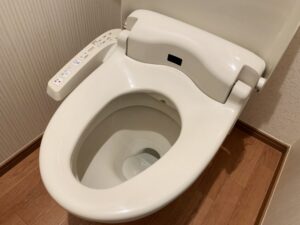
The electronic bidet-style toilet seat is often called a Washlet, a name TOTO introduced in 1980 that stuck as a general term (like “Xerox” for copiers). Today these seats really are everywhere: the Cabinet Office’s Consumer Confidence Survey puts ownership at about 82% of households with two or more people, with more than one unit per household on average. The main makers are TOTO, LIXIL (formerly INAX), and Panasonic. You will meet them in homes, hotels, department stores, train stations, highway rest stops, and even many convenience stores.
One caveat worth knowing, since it surprises visitors who assume the washing function is universal: owning a washlet does not mean everyone uses it. In one survey, only around half of people who had one at home said they used the washing function almost every time. Plenty of Japanese people press nothing but the flush.
The buttons, decoded
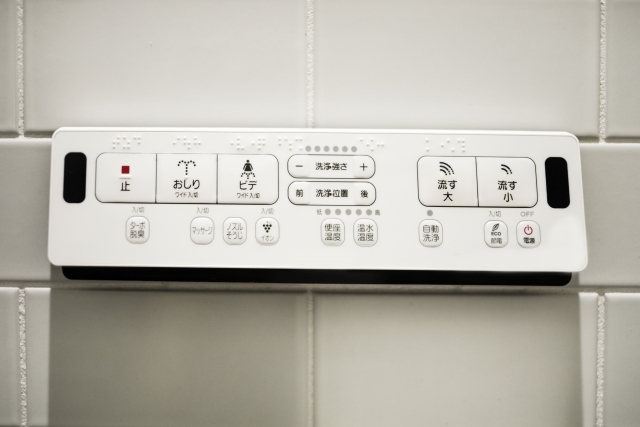
Panels vary by brand, but the core functions are the same. Here are the ones that matter, with the kanji you will often see:
| Button / label | What it does |
|---|---|
| おしり (oshiri) | Rear wash — a gentle warm-water spray |
| ビデ (bidet) | Front wash, designed for women |
| 止 / STOP | Stops the spray (press this when you’re done) |
| 音 / 音姫 (otohime) | Plays a masking sound to cover bathroom noise |
| 大 (dai) | Large flush — for more waste, uses more water |
| 小 (sho) | Small flush — for less waste, saves water |
| 水勢 / 強弱 | Adjusts water pressure (weaker/stronger) |
The one button you must remember is 止 (STOP). If you press a wash button and want it to end, STOP turns off the spray. The wash also stops automatically when you stand up.
How to flush (this trips up a lot of visitors)
The wash buttons and the flush are separate systems, and the flush is not always obvious. Look, in this order, for:
- A large lever or panel on the wall or tank, often marked 大 (large) and 小 (small).
- A push button labeled 大 / 小 on the side of the seat panel.
- A hands-free sensor — wave your hand over a marked panel, or it may flush automatically when you stand.
Use 小 (small) for liquid waste to save water, and 大 (large) otherwise. If you genuinely cannot find any flush control, waving your hand near sensor-style panels usually works.
Why Japan went all-in on high-tech toilets
Three forces pushed these toilets from luxury to standard:
- Cleanliness is a core daily value. Personal and public hygiene is taken seriously in Japan, and a toilet that washes and self-cleans fits that mindset naturally.
- Comfort in small spaces. Homes are compact, and winters are cold in many regions. A heated seat and a warm-water wash turn a small room into a genuinely comfortable one.
- Fierce maker competition. TOTO, LIXIL, and Panasonic spent decades adding features — deodorizing, air drying, auto lids, water-saving flushes, self-cleaning nozzles — which drove quality up and prices down until the seats became mainstream.
The “sound princess” and other quality-of-life features
The otohime (“sound princess”) button plays a flushing-water sound to mask natural noises, so people don’t flush repeatedly just for privacy — a small feature that saves a surprising amount of water. Other common extras include a self-deodorizing fan, a warm-air dryer, a lid that opens as you approach, and a nozzle that rinses itself before and after use.
Are they hygienic?
Yes. The washing nozzle is separate from the bowl, retracts when not in use, and typically rinses itself. Public high-tech toilets in stations and department stores are cleaned frequently. If you prefer, many panels have a “nozzle clean” button, and you can always skip the wash function entirely and use the toilet as a normal one.
Do you have to use the bidet function?
No. It is entirely optional. If you would rather not, just use the toilet normally and press the flush control. Nothing sprays unless you press a wash button.
Where you’ll find them — and where you won’t
High-tech toilets are the norm in hotels, department stores, shopping malls, major train stations, and highway service areas. However, not every toilet in Japan is high-tech: older buildings, small rural stations, some temples, and budget facilities may have a simple Western toilet or a traditional Japanese squat toilet. Squat toilets are used facing the hood, and you flush with a lever or button just as usual.
Common mistakes to avoid
- Pressing a wash button and panicking — just press 止 (STOP).
- Looking for a flush on the seat panel when it’s actually a lever on the wall or tank.
- Standing up mid-wash and getting a surprise — the spray stops when you rise, but STOP is faster.
- Assuming every toilet has these features; carry a small tissue pack for older facilities.
Frequently asked questions
Which button do I press first?
None, until you want a wash. Do your business first, then optionally press おしり (rear) or ビデ (bidet), and 止 (STOP) to end it. Finally, find the flush lever or 大/小 button.
What do 大 and 小 mean?
大 (dai) is the large flush and 小 (sho) is the small, water-saving flush. Use 小 for liquid waste.
Are all toilets in Japan high-tech?
No. They are very common but not universal. Expect simpler or squat toilets in older buildings, small stations, and some temples.
Last checked
Last checked: July 2026. Household penetration figures come from Japanese government consumer surveys and are updated periodically. Panel layouts differ by manufacturer and model.
Sources and further reading
- Cabinet Office of Japan — Consumer Confidence Survey, the source of the household ownership figures for warm-water washing toilet seats.
- Japan Sanitary Equipment Industry Association — penetration statistics and standardised toilet button pictograms.
- TOTO, LIXIL, and Panasonic — official product guides for washlet seat functions.