Short answer: yes. Tap water is safe to drink almost everywhere in Japan, straight from the faucet, and you do not need to buy bottled water to stay hydrated. This guide explains why it’s safe, what it tastes like, the handful of exceptions worth knowing, and how to save money (and plastic) while traveling.
- Why Japan’s tap water is safe to drink
- What about PFAS?
- What does it taste like?
- Can you drink it in hotels?
- Water at restaurants
- Public drinking fountains
- The few exceptions worth knowing
- Should you buy bottled water?
- Can you refill a bottle?
- Why so many bottled drinks if tap water is safe?
- Final advice for visitors
- Frequently asked questions
- Last checked
- Sources and further reading
Why Japan’s tap water is safe to drink
Japan regulates drinking water under Article 4 of the Water Supply Act. The standards themselves are set by ministerial ordinance and are legally enforceable, not advisory: the current list, in force since 1 April 2026, covers 52 tested parameters spanning bacteria, metals, chemicals, taste, odour, and appearance. Municipal utilities treat and monitor water continuously to meet them, and the Ministry of the Environment now oversees the quality standards.
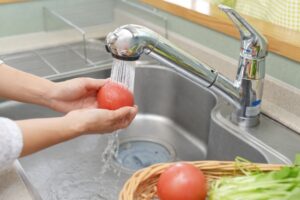
Big cities have also gone beyond basic treatment. Tokyo’s waterworks completed advanced purification — ozone treatment plus biological activated carbon, which strips out trihalomethanes, organic matter, and musty odours — at every one of its Tone River system plants back in October 2013. Those plants supply the bulk of the capital, and the upgrade is the main reason Tokyo tap water tastes noticeably better than it did a generation ago.
What about PFAS?
This is the question thoughtful visitors actually ask in 2026, and Japan’s answer changed this year. PFOS and PFOA — the “forever chemicals” — were previously handled as provisional targets. Since 1 April 2026 they are part of the enforceable water quality standards, with a limit of 0.00005 mg/L (50 nanograms per litre) for the two combined. In other words, PFAS levels are now something utilities are legally obliged to meet and test for, not merely aim at. Localised contamination has been reported near some specific sites over the years, and affected utilities respond by switching sources or adding treatment. For a traveler drinking from taps in hotels, restaurants, and stations, this is not a practical worry.
What does it taste like?
Generally clean and mild. Japanese tap water is mostly soft water (low in minerals), which many people find easy to drink and good for tea, coffee, and cooking. You may notice a faint chlorine taste in some areas, since chlorine keeps the water safe through the pipes — chilling it in the fridge or letting it sit briefly reduces that. Taste can vary slightly by region and season, but it is safe throughout.
Can you drink it in hotels?
Yes, in the vast majority of hotels the bathroom and any kitchenette taps are drinkable. If a specific tap is not for drinking, it will usually be labeled (for example, a sign reading 飲めません, “not drinkable”). When there’s no such warning, the tap water is fine. Hotels also typically provide a kettle, and boiling is never a bad idea if you simply prefer it.
Water at restaurants
Restaurants serve free water or tea automatically, without you asking or paying. This chilled water (o-hiya) is tap water and completely safe. You will rarely need to buy a drink just to have water with your meal.
Public drinking fountains
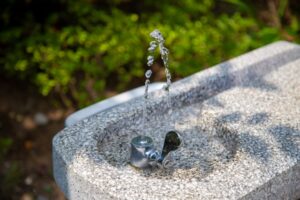
Parks, schools, and many stations have public drinking fountains, and the water is safe. These are handy free refill points in summer. As with any shared fountain, use common sense about hygiene at the spout.
The few exceptions worth knowing
“Safe almost everywhere” still leaves a few edge cases:
- Very old buildings with rooftop storage tanks. Some older buildings store water in a tank before it reaches your tap. The municipal water is fine; occasionally an ageing, poorly maintained tank can affect taste. If tap water in an old building tastes off, switch to bottled to be safe.
- Rural well water. A few rural homes or facilities use private well water (ido mizu) rather than municipal supply. This isn’t part of the city system; if a sign indicates well water, ask before drinking.
- After a major earthquake or typhoon. Disasters can disrupt supply and trigger temporary “boil water” advisories. Follow local guidance and bottled water instructions during such periods.
Should you buy bottled water?
Not for safety — only for preference or convenience. If you like cold water on the go, a chilled bottle is nice, but you can refill for free at hotels, fountains, and restaurants. Carrying a reusable bottle saves money over a multi-day trip and cuts plastic waste, which fits neatly with Japan’s emphasis on reducing and sorting waste.
Can you refill a bottle?
Yes. Refill from any drinkable tap, a public fountain, or ask at cafes. A growing number of places offer free refill points. It’s a simple habit that pays off fast.
Why so many bottled drinks if tap water is safe?
Because Japan’s drink culture is about variety and convenience, not distrust of tap water. Convenience stores and the country’s ubiquitous vending machines sell teas, coffees, sports drinks, and flavoured waters because people want them — not because the tap is unsafe. Locals drink plenty of tap water at home and in restaurants.
Final advice for visitors
- Drink the tap water — it’s safe nationwide.
- Carry a reusable bottle and refill for free.
- Watch for rare 飲めません (“not drinkable”) labels and well-water signs.
- Follow official advice after earthquakes or typhoons.
Frequently asked questions
Can I drink tap water in hotels?
Yes, almost always. Unless a tap is specifically labeled “not for drinking,” hotel tap water is safe.
Can I drink from park fountains?
Yes. Public drinking fountains in parks, stations, and schools provide safe water and make good free refill points.
What should I do after an earthquake or typhoon?
Follow local advisories. Disasters can temporarily disrupt supply and prompt boil-water notices, so use bottled water if instructed.
Last checked
Last checked: July 2026. Water quality standards are set under Japan’s Water Supply Act and updated periodically; local advisories apply after disasters.
Sources and further reading
- Ministry of the Environment — the 52 water quality standard items and their limits, in force from 1 April 2026 (including PFOS/PFOA).
- Ministry of the Environment — overview of drinking water quality standards under the Water Supply Act.
- Bureau of Waterworks, Tokyo Metropolitan Government — advanced purification treatment.
- Bureau of Waterworks, Tokyo — water quality standards and testing results for Tokyo.