- Why Is Japan So Clean Even Without Many Trash Bins?
- Why Are There So Few Public Trash Bins?
- The Basic Rule: Carry Your Trash Until You Find the Right Place
- Where Can Travelers Throw Away Trash?
- Why Don’t People Litter More?
- Trash Sorting Makes Public Bins More Complicated
- What Should You Do With Takeout Food Trash?
- Useful Habits for Travelers
- Is Japan Always Clean?
- Related Articles
- Final Advice
- Last checked
- Sources and further reading
- Frequently Asked Questions
Why Is Japan So Clean Even Without Many Trash Bins?
One of the first things many visitors notice in Japan is a strange combination: streets are often clean, but public trash bins can be surprisingly hard to find.
The short answer is that Japan relies less on public trash bins and more on personal responsibility, store-based disposal, recycling rules, and regular cleaning by businesses, local governments, and communities. People are generally expected to carry their own trash until they find the right place to dispose of it.
For travelers, the important question is not only “Why is Japan clean?” but also “What should I do with my trash?” This guide explains both.

Why Are There So Few Public Trash Bins?
There is no single reason. Several factors work together.
First, public trash bins require maintenance. Someone has to collect the trash, separate it, clean the bins, and prevent overflow. In busy stations, parks, and shopping streets, a general trash bin can fill very quickly.
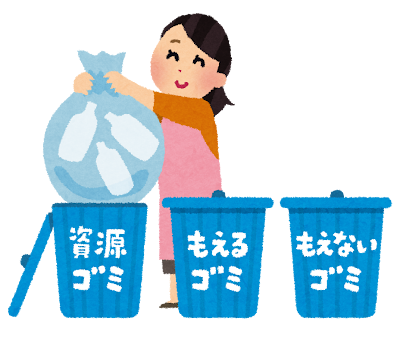
Second, Japan has detailed waste separation rules. A simple “throw anything here” bin does not fit well with a system that separates burnable trash, cans, bottles, PET bottles, paper, and other categories.
Third, security concerns also played a role in reducing bins in some public spaces, especially after major incidents in the 1990s. For that reason, many train stations and public facilities became more cautious about unattended containers. The exact situation differs by location, but the result is familiar to travelers: fewer open public bins than expected.
The Basic Rule: Carry Your Trash Until You Find the Right Place
In Japan, it is common to keep small trash in your bag until you can dispose of it properly. This may feel inconvenient at first, but it is normal local behavior.
If you buy a snack and cannot find a bin, do not leave the wrapper on a bench or beside a vending machine. Put it in your bag and throw it away later at your hotel, a station bin, a convenience store bin, or another appropriate place.
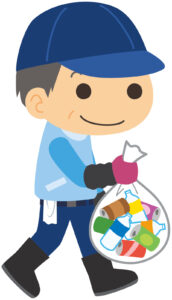
A small plastic bag or reusable pouch is useful when sightseeing. Many Japanese people also carry small bags for wrappers, tissues, receipts, and other small items.
Where Can Travelers Throw Away Trash?
Even though public trash bins are limited, you do have options.
Convenience Stores
Convenience stores often have trash bins, but they are mainly for customers and items bought at that store. If you buy a drink or food there, it is usually acceptable to throw away the packaging there.
However, bringing a large bag of outside trash to a convenience store is bad manners. Some stores have moved bins inside or removed them because people abused them.
Vending Machine Recycling Boxes
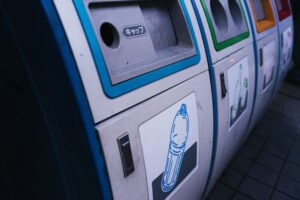
Many vending machines have recycling boxes nearby. These are usually for cans, bottles, and PET bottles bought from vending machines. They are not general trash bins.
Do not put food wrappers, coffee cups, or household trash into a bottle recycling box. If the opening is shaped for bottles and cans, use it only for that purpose.
For more about vending machines, see: The Vending Machine Culture in Japan.
Train Stations
Some stations have bins near ticket gates, platforms, or shops. Others have few or none. Large stations may have separate bins for newspapers, cans, bottles, and burnable trash.
If you cannot find a bin at one station, do not assume you are doing something wrong. It is simply common in Japan. Carry the trash until the next opportunity.
Fast Food Shops and Cafes
If you eat inside a fast food restaurant, cafe, or food court, use the shop’s tray return area or trash bins. These places usually have a system for separating cups, lids, straws, and food waste.
If you buy takeout and eat somewhere else, you may need to carry the trash with you. Some shops accept their own packaging back, but not always.
Hotels
Your hotel room is often the easiest place to dispose of small daily trash. Hotel staff will handle normal room trash. If you have bottles or cans, keep them separate if possible.
For larger trash or unusual items, ask the front desk. Do not leave large items in public areas.
Why Don’t People Litter More?
Clean streets are not only the result of strict rules. They also come from social habits.
Many people in Japan are taught from childhood to clean shared spaces. Students often clean classrooms, hallways, and school grounds. Neighborhood cleanup activities also exist in many communities.
This creates a simple idea: public spaces are shared, so leaving trash behind causes trouble for someone else. Not everyone follows this perfectly, and littering does happen, especially around nightlife areas or after events. But the general expectation is that you manage your own trash.
Businesses also play a large role. Shops clean the area in front of their stores. Train companies clean stations. Local governments clean streets and parks. The clean appearance of Japanese cities is the result of many small systems working together, not magic.
Trash Sorting Makes Public Bins More Complicated
Japan’s waste separation rules are detailed and differ by municipality. What counts as burnable trash in one city may be treated differently in another. This is one reason general public bins are not always simple to manage.
For residents, sorting trash can be quite strict. For short-term visitors, the main point is simpler: do not mix everything into recycling boxes, and follow signs when they are available.
If you are staying in Japan longer, read more here: Why Is Waste Separation So Strict in Japan?.
What Should You Do With Takeout Food Trash?
This is one of the most common problems for tourists.
If you buy food from a convenience store and eat nearby, you may be able to use the store’s bin. If you buy food at a festival, event, or market, there may be event-specific trash stations. Use those if available.
If you buy street food in a tourist area, the shop may expect you to eat near the shop and return skewers, trays, or cups there. In some areas, walking while eating is discouraged because it creates litter and crowding.
If there is no obvious bin, carry the trash. It may feel awkward, but it is better than leaving it somewhere inappropriate.
Useful Habits for Travelers
- Carry a small trash bag in your backpack or pocket.
- Separate bottles and cans from food wrappers when possible.
- Use vending machine recycling boxes only for bottles and cans.
- Do not bring outside trash into convenience stores in large amounts.
- Look for trash stations at events, food courts, and parks.
- Bring small trash back to your hotel if needed.
- If a sign says not to throw trash there, follow it.
Is Japan Always Clean?
No. Japan is often clean, but not perfectly clean. You may see trash around entertainment districts late at night, after festivals, near smoking areas, or in crowded tourist spots.
The difference is that trash is usually cleaned quickly, and many people avoid leaving trash in the first place. The clean image comes from both behavior and maintenance.
Related Articles
- Why Is Waste Separation So Strict in Japan?
- The Vending Machine Culture in Japan
- Can You Drink Tap Water in Japan?
Final Advice
Japan stays clean without many public trash bins because people, shops, transport companies, local governments, and communities all share responsibility. The system works because people usually do not treat the street as a place to leave trash.
For visitors, the best rule is simple: carry your trash until you find the right bin. It is a small habit, but it helps you travel more smoothly and respectfully in Japan.
Last checked
Last checked: July 2026. Trash-bin availability changes by station, event, and facility, so use the signs in front of you rather than assuming every place follows the same pattern.
Sources and further reading
Frequently Asked Questions
Why are public trash bins hard to find?
Bins are limited for several reasons, including facility management, safety, and the expectation that people sort and carry small trash until they find the right place.
Can I throw hotel trash away at convenience stores?
No. Convenience store bins are for small items from that store or immediate use. Hotel or room trash should be handled at your accommodation.
What should travelers carry?
A small plastic bag is useful for wrappers, tissues, and empty containers until you return to your hotel, station, or a clearly labeled bin area.