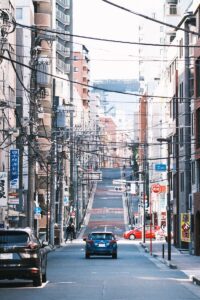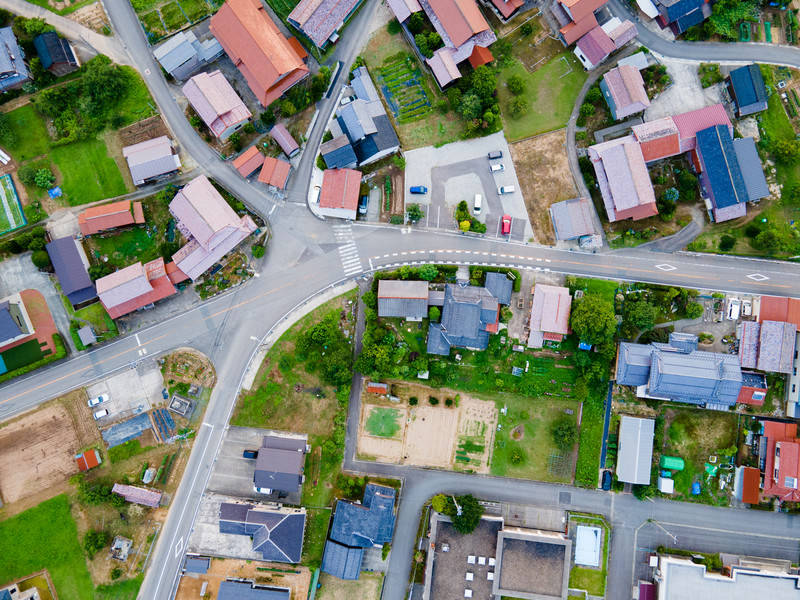
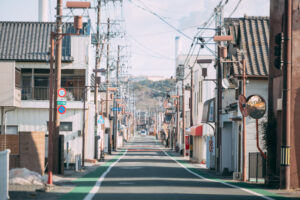
“Why are the roads in Japan so narrow?” This is a question that many foreign tourists visiting Japan for the first time or those driving in Japan might ask. The answer to this question lies in the deep historical background and secrets of urban planning. In this article, we’ll explore why Japan’s roads are so narrow, while also providing tips on how to drive safely on these narrow roads and how to minimize the impact on daily life. Let’s unravel the mystery of Japan’s narrow roads together!
Exploring the Reasons Behind Japan’s Narrow Roads
The reasons behind Japan’s narrow roads are deeply rooted in history. One major factor is the historical background of land use and city design that dates back to the Edo period. Additionally, post-war urban planning also played a role in maintaining these narrow roads as cities maximized the use of limited land. In this section, we’ll delve into the historical background to uncover why Japan’s roads are so narrow.
The Influence of Historical Background
To understand why Japan’s roads are narrow, we must first look back at Japan’s history, particularly the urban design during the Edo period, which has had a significant impact on the modern-day streets of Japan.
The Relationship Between Edo Period Streets and Road Width
During the Edo period, Japanese cities were designed with defense in mind. The city structure, centered around a castle, had roads that were intentionally made narrow and winding to prevent enemies from easily invading. This design also helped to slow the spread of fires. These historical practices have left a legacy of narrow roads that persists in modern cities.
Land Scarcity and Urban Planning Challenges
Land scarcity has also been a contributing factor to the creation of narrow roads. Japan has limited land area with many mountainous regions, necessitating the efficient use of available flat land. Consequently, there was little room to widen roads, leaving narrow streets to be passed down through the generations. Moreover, during the rapid post-war reconstruction period, cities were rebuilt quickly using existing narrow roads, further entrenching their use.
The History of Urban Planning and Redevelopment
Urban planning and the history of redevelopment in Japan are also deeply intertwined with the reasons why roads have remained narrow. Understanding how post-war Japan rebuilt its cities and decided on road widths provides insight into why the roads are still narrow today.
Post-War Reconstruction and the Fixation of Narrow Roads
After World War II, Japan’s rapid reconstruction efforts led to the preservation of pre-war infrastructure, including narrow roads, due to limited resources and time. There was little opportunity to expand road widths, as the priority was on swiftly restoring housing and commercial facilities to accommodate the growing population and economic expansion. As a result, the narrow roads became a permanent fixture in many urban areas.
Redevelopment Progress and Solutions for Narrow Roads
In modern times, redevelopment projects have highlighted the challenge of improving narrow roads. Particularly in urban centers, redevelopment projects are underway to widen roads and improve new road infrastructure. For example, in certain areas of Tokyo, redevelopment projects include the expansion of roadways as part of urban renewal efforts. However, such initiatives require long-term planning, and it will take time to address the issue of narrow roads comprehensively.
Driving on Narrow Roads and Safety Measures
Understanding the reasons behind Japan’s narrow roads is important, but equally important is how to drive safely on these roads. Narrow roadways come with specific risks and considerations, and knowing these can help you drive with confidence. In this section, we’ll explore driving tips and new safety measures for narrow roads.

Tips for Driving on Narrow Roads
To safely drive on Japan’s narrow roads, several tips should be kept in mind. Special attention is needed when passing oncoming vehicles and when parking, as these situations require particular skills.
Tips for Passing Oncoming Vehicles
On narrow roads, passing oncoming vehicles can be challenging. In such situations, it’s important to stay calm, slow down, and ensure there is enough space for both vehicles to pass safely. If the road is particularly narrow, one vehicle may need to back up slightly to a wider area to allow the other to pass. Additionally, using your turn signal early to indicate your intentions to the other driver is crucial.
Parking Tips
Parking on narrow roads can be especially difficult, particularly when maneuvering into parking spaces. When parking along narrow streets, make sure to pull your car as close to the side as possible so that the vehicle does not protrude into the roadway. Additionally, when opening your door after parking, consider the possibility of pedestrians or cyclists passing by, and open the door slowly. When backing into a parking space, take your time and use your mirrors carefully to check your surroundings.
Implementation of New Traffic Safety Measures
In recent years, new technologies and measures have been introduced to ensure safety on narrow roads. Systems designed to allow for safer driving and measures to protect pedestrians are evolving, making driving on narrow roads safer and more secure.
Compatibility of Autonomous Vehicles with Narrow Roads
As autonomous vehicle technology advances, systems are being developed to allow safe driving even on narrow roads. For instance, sophisticated sensor technology designed for narrow road conditions and automatic control functions that allow smooth passing in tight spaces are being integrated into vehicles. This enables drivers to use autonomous vehicles on narrow roads without fear. However, the widespread adoption of these technologies will take time, and currently, their use is limited to certain regions and test operations.
Measures to Protect Pedestrians
Ensuring the safety of pedestrians on narrow roads is just as important as ensuring vehicle safety. Recent efforts include the creation of pedestrian-priority streets and the strengthening of speed limits on narrow roads. Additionally, LED lighting has been installed along roadsides to improve nighttime visibility, and color paving has been used to indicate pedestrian pathways. These measures have proven effective in reducing accidents on narrow roads and are expected to be implemented in more areas in the future.

Impact of Narrow Roads on Daily Life
The narrow roads in Japan have various impacts on daily life, particularly in terms of moving and commuting. However, there are also ways to adapt to these challenges, and future solutions are being explored. In this section, we’ll examine how narrow roads affect daily life and explore strategies and future prospects for improvement.
Inconveniences in Daily Life and How to Overcome Them
The inconveniences of narrow roads are most evident when moving or commuting. However, there are ways to overcome these challenges.
How to Overcome Moving and Commuting Difficulties
Moving on narrow roads can be particularly challenging when transporting large furniture or heavy items. Because trucks often cannot enter narrow streets directly, the distance that must be covered by hand increases. To avoid this situation, it’s important to secure nearby parking spaces or wide spots on the street in advance so that items can be transported from there. Additionally, informing the moving company about the road width beforehand can help them arrange appropriate vehicles and personnel.
Commuting can also be affected by narrow roads, especially during peak hours when the roads become crowded with cars, bicycles, and pedestrians. In such cases, it is advisable to leave home early or find alternative routes to avoid congestion. When using public transportation, it is also important to consider the congestion levels at bus stops and stations located along narrow roads and plan accordingly.
Tips for Living Comfortably on Narrow Roads
Even if you live on a narrow road, there are ways to live comfortably. For example, if the road in front of your house is narrow, consider arranging your parking space to facilitate easier access. Choosing a small car that fits the road width can also reduce stress when parking or driving.
Additionally, fostering good relationships with your neighbors, which is more likely on narrow streets where people often encounter each other, can make life more pleasant. By building good rapport with your community and adhering to local rules and etiquette, you can avoid conflicts and create a peaceful living environment.
Prospects for Future Urban Planning and Road Width
As urban redevelopment projects progress, how will the issue of narrow roads be resolved? Let’s consider the future prospects for road width in Japan.
H4: Future Improvements in Japan’s Cityscape and Road Width
As urban redevelopment progresses, plans to widen roads and develop new infrastructure are underway. In particular, redevelopment projects in major metropolitan areas are focusing on widening roads to improve traffic convenience. As a result, it is expected that narrow roads will decrease, leading to a more comfortable cityscape.
However, not all areas will see immediate road width improvements, and some historical districts and densely populated areas may still retain narrow streets. Therefore, road widening efforts as part of redevelopment require careful planning tailored to each region’s specific circumstances.
Policies on Road Width and Their Impact
The government and local authorities are proposing policies to address narrow road issues, including measures to widen roads and provide subsidies for such improvements. For instance, policies are being considered to limit vehicle access on narrow roads to ensure pedestrian and cyclist safety and to provide financial support for road-widening projects.
If these policies are implemented, it could significantly enhance the comfort of living and commuting on narrow roads. However, there are also challenges to expanding road width, and policy implementation may take time. Continuing to monitor urban planning and road width improvement efforts will be crucial.